In the Muromachi period, so many people walked to Kumano that the procession earned a nickname: the pilgrimage of ants. They were crossing the mountains of the Kii Peninsula to reach three shrines. Retired emperors had started the fashion centuries earlier. It is said that Go Shirakawa alone made the trip 33 times.
In November 2024 I spent six days on the Kumano Kodo, mostly on the Nakahechi, the route most pilgrims from Kyoto used to take. The custom had almost disappeared until recent decades. People walk it again today, but I walked it by myself.
I decided to be by myself because I wanted to be in silence. I was looking to reset and breathe in the fresh mountain air, and it’s exactly what I got.
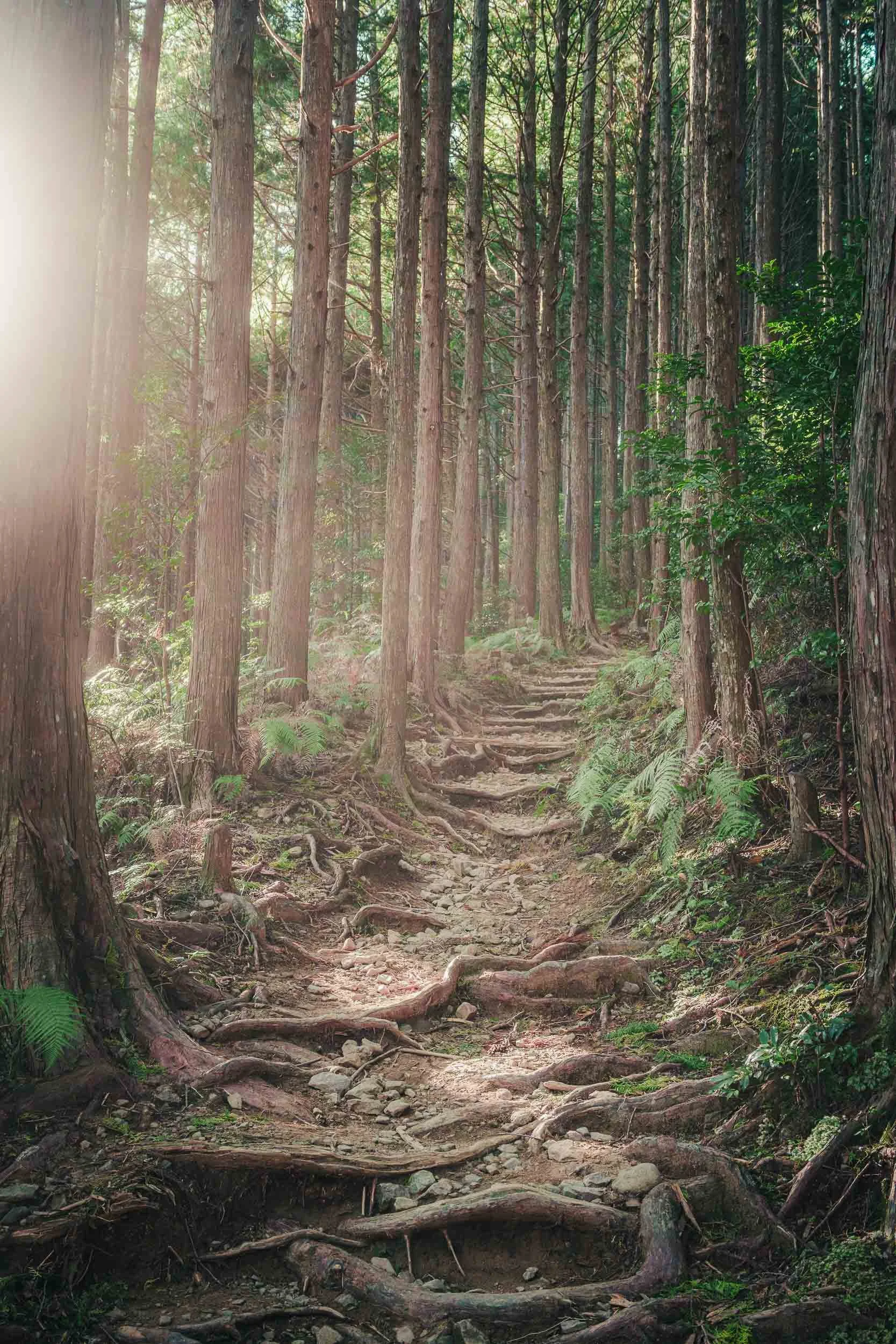
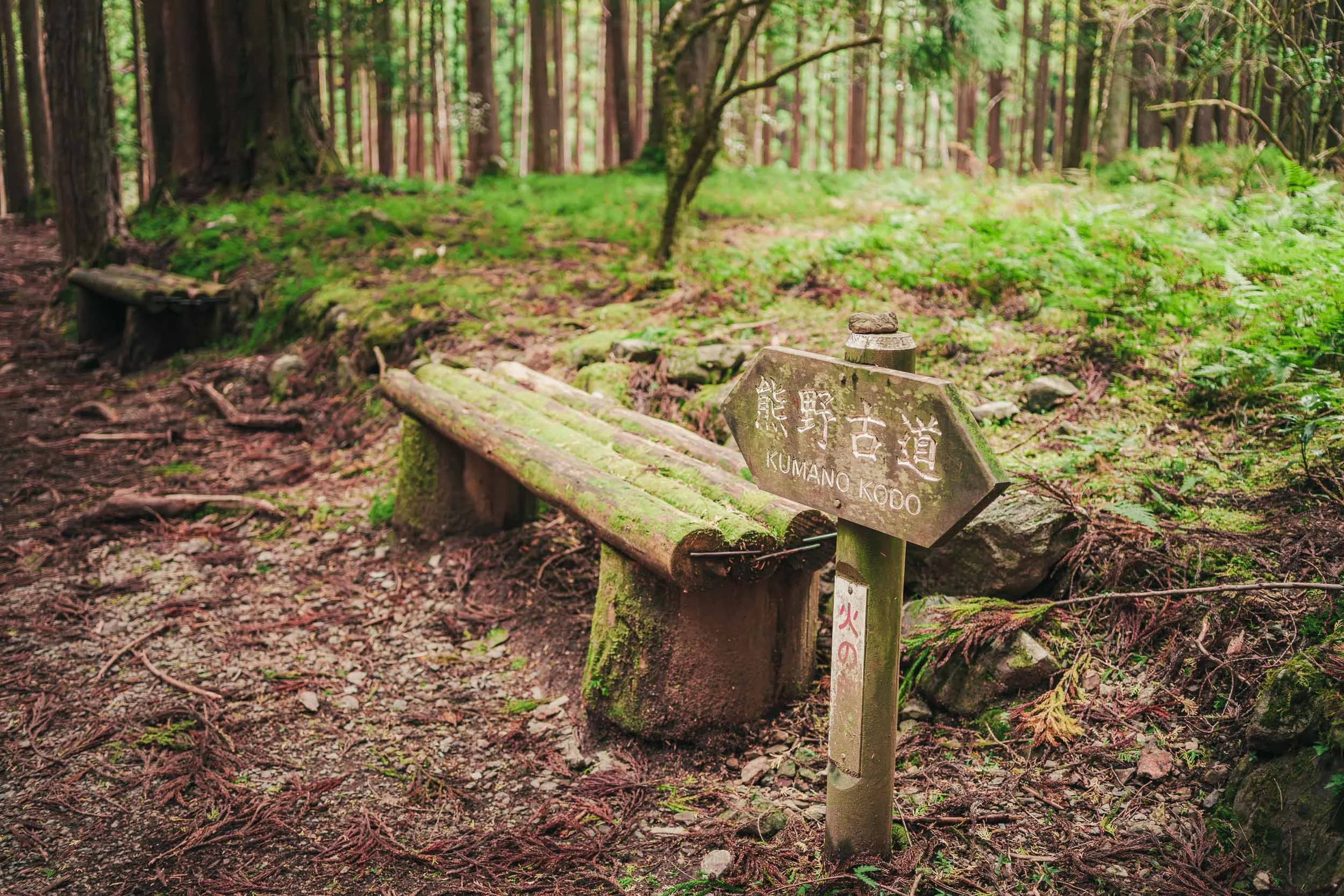
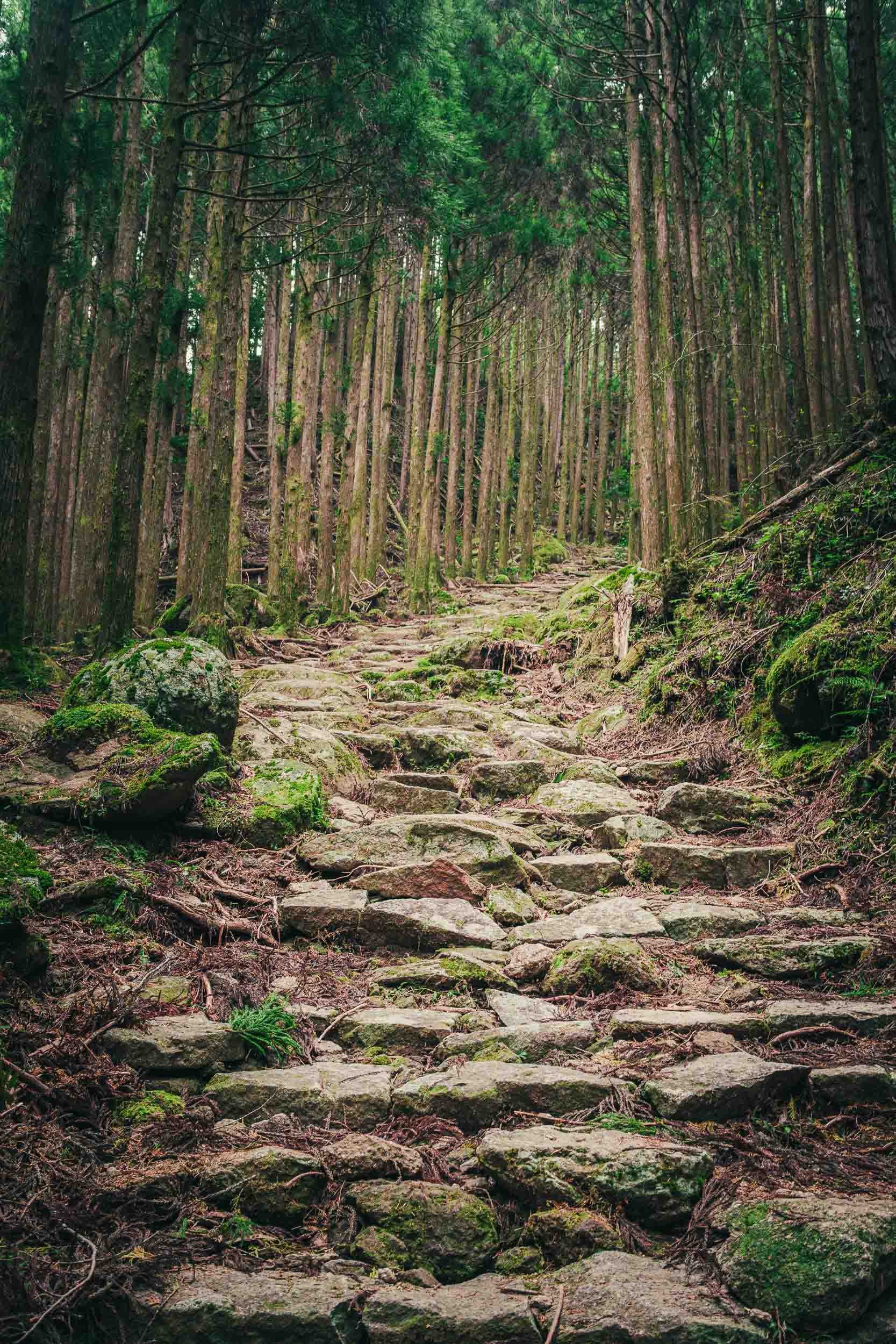
Along the trail
The Nakahechi starts at Takijiri, where two rivers meet outside Tanabe. It was often believed to be the entrance to both the Land of the Gods and the Land of the Dead. From there a steep staircase climbs into the mountains, and it’s about 30 kilometers to Hongu, through forest and small villages like Takahara, with its rice terraces and a few houses on the mountainside. Past Hongu the trail continues over the mountains to Koguchi. On that stretch is Hyakken-gura, a lookout where pilgrims have stopped to look at the Kii Mountains for over 1,000 years.
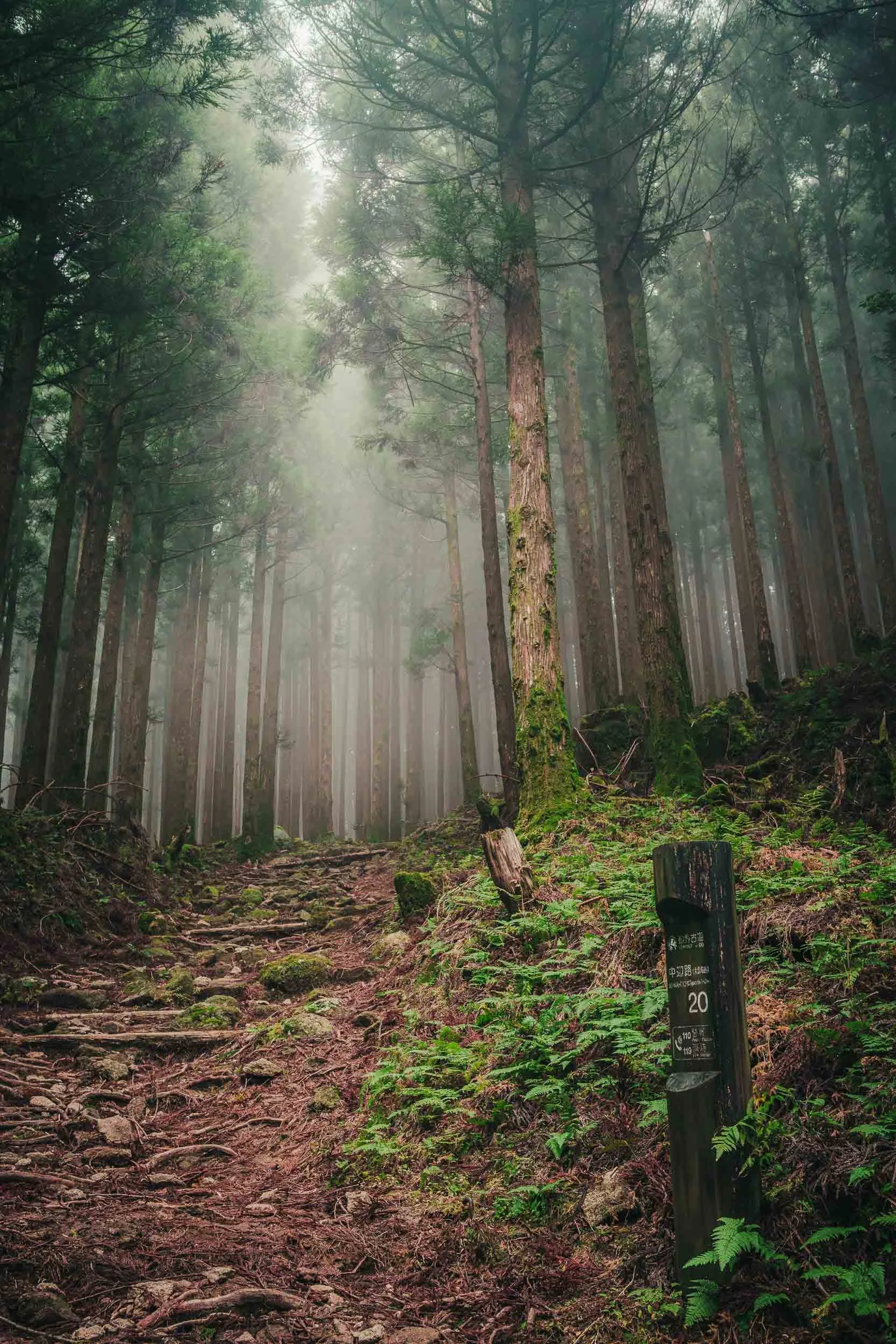
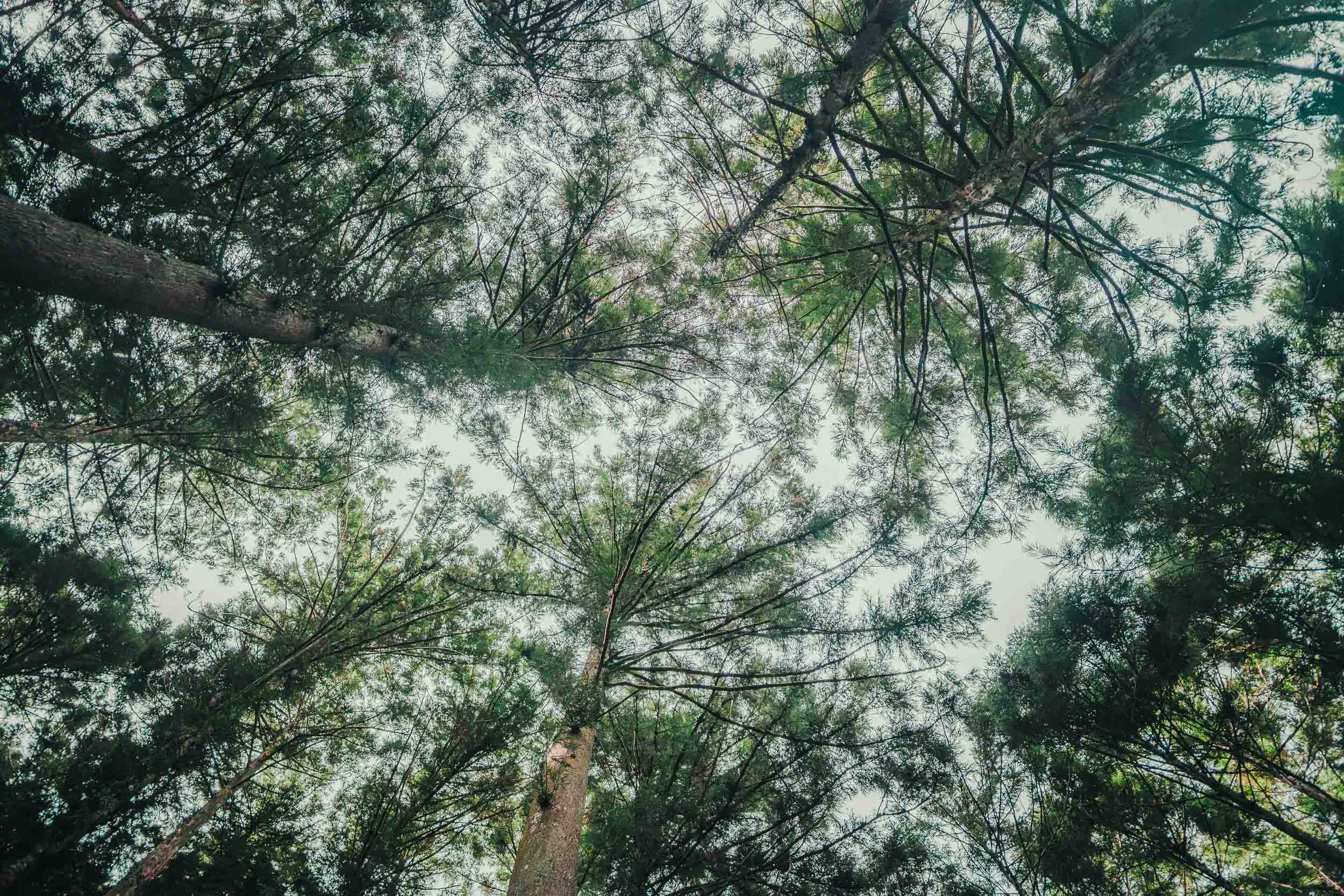
Much of the trail runs through cedar forest, with roots across the path and stone steps on the climbs. In some stretches the path is old paving stones covered in moss.
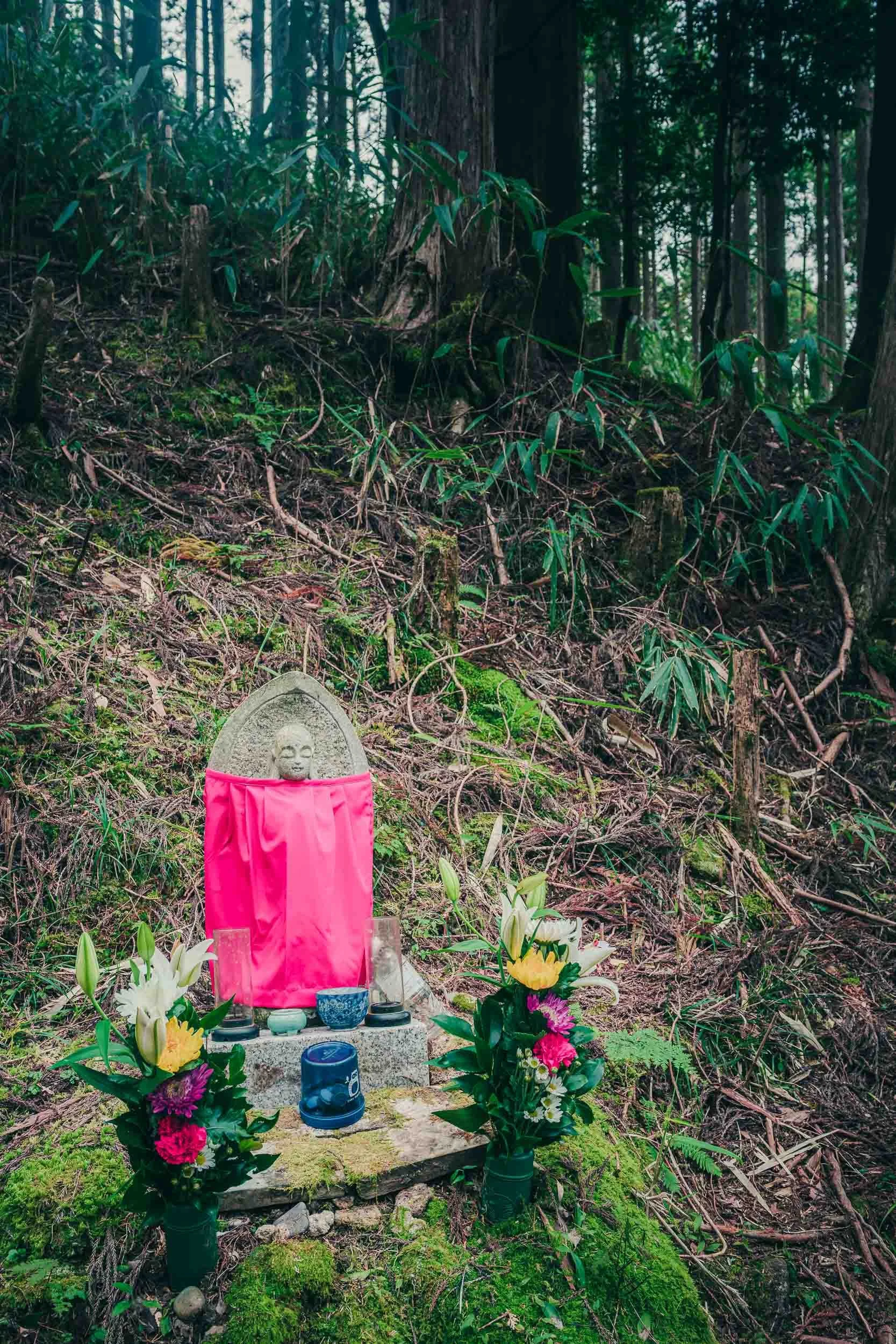
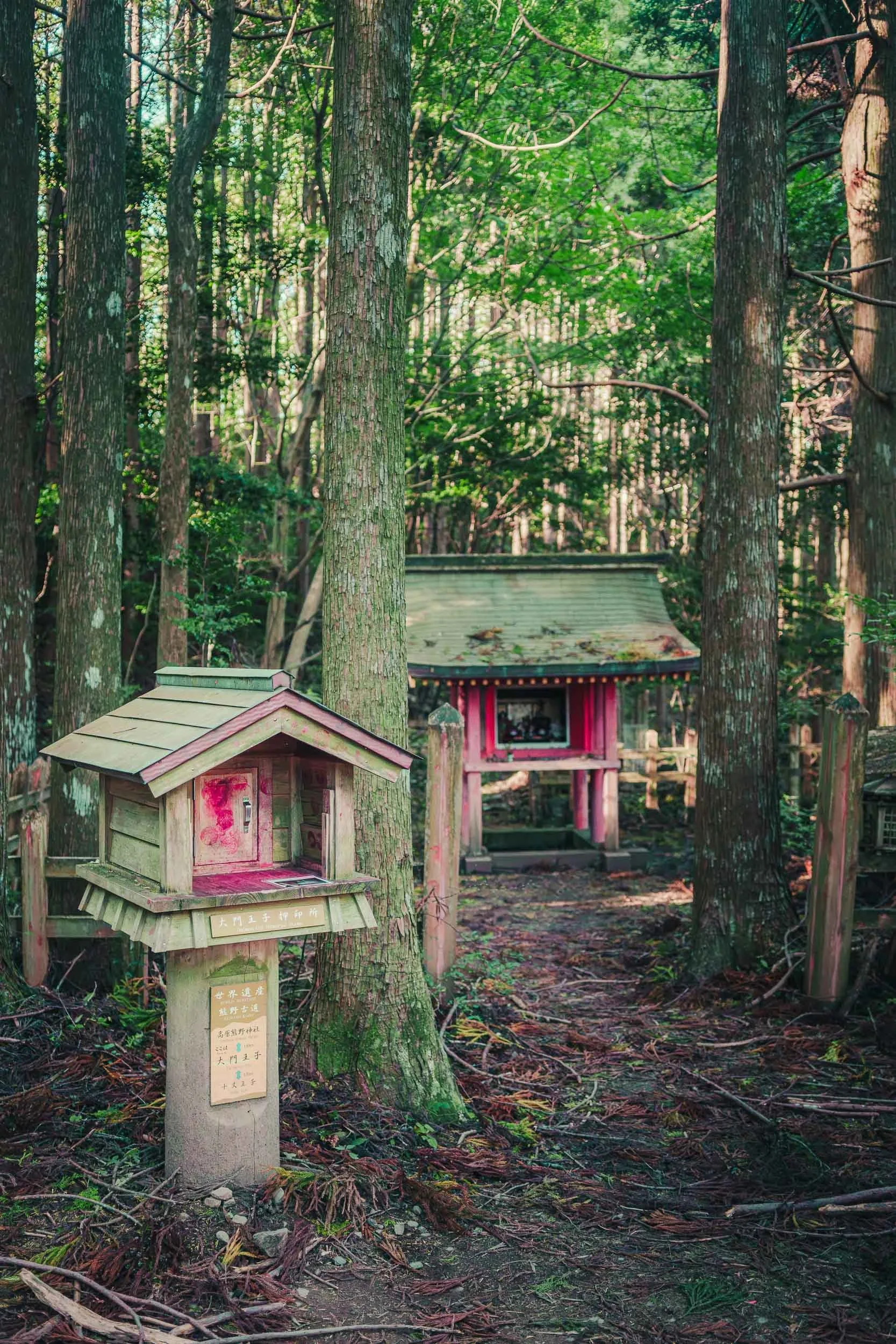
The old pilgrims rested at the Oji, the 99 subsidiary shrines along the way. Few of them survive in their original condition, but small shrines still line the path. Passing by each of them made me feel I was not alone, even though I walked in silence.
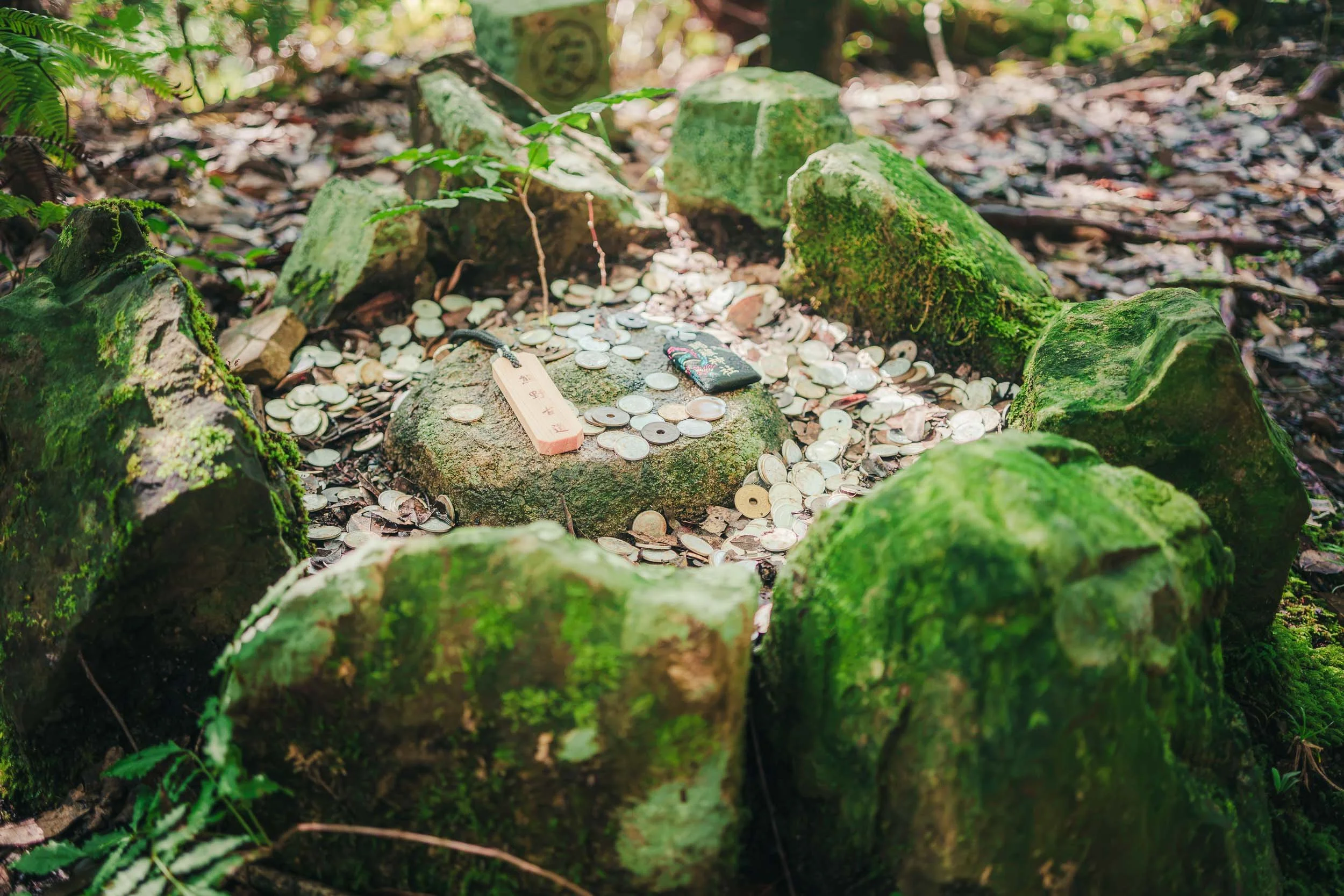
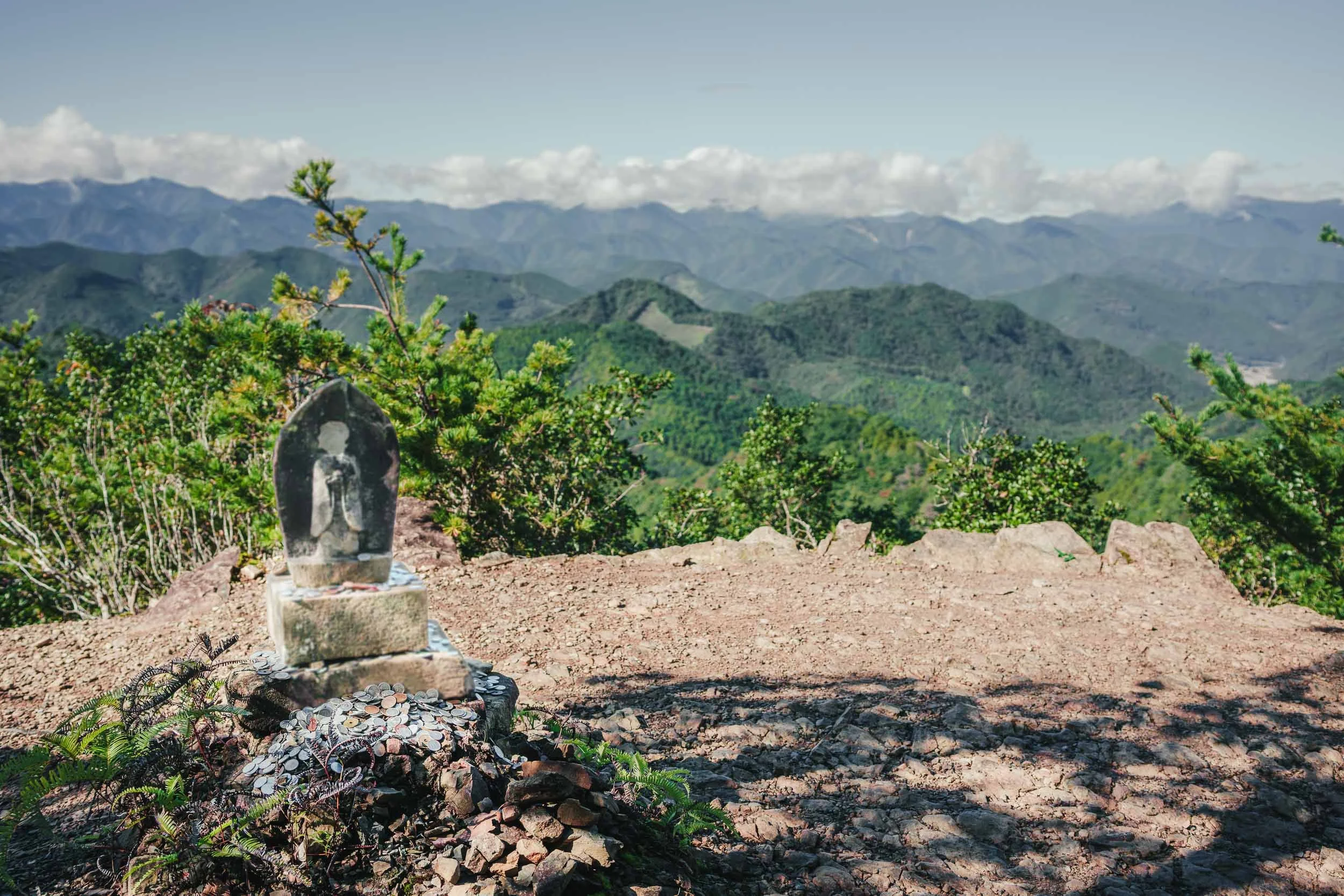
At times I would pass a little wooden shrine on a post, or a stone statue with fresh flowers on both sides, or a pile of coins on a stone, surrounded by mossy rocks. A sign that so many people, the modern pilgrims of today, had stopped there and left them as offerings.
Minshuku
Most nights I slept in minshuku, small family guesthouses, managed by adorable elderly couples. It’s one of the things that make hiking the Kumano Kodo such a wonderful experience. It feels like coming back home, and especially after hiking for 8-10 hours, nothing hits the spot like a hot bath and some hot tea in a quiet living room.
Small lodgings like these are part of how the area handles tourism. The road became a World Heritage site in 2004, and two years later the city of Tanabe set up a tourism bureau. It hired native English speakers and standardized the signs, and its booking service, Kumano Travel, lets a walker from the other side of the world reserve a room with families like these.
I booked mine the same way. I don't know who will run these houses when those couples stop, but I hope they will stay open for as long as possible. A walk of several days needs a comfortable home every night.
Kamikura Shrine
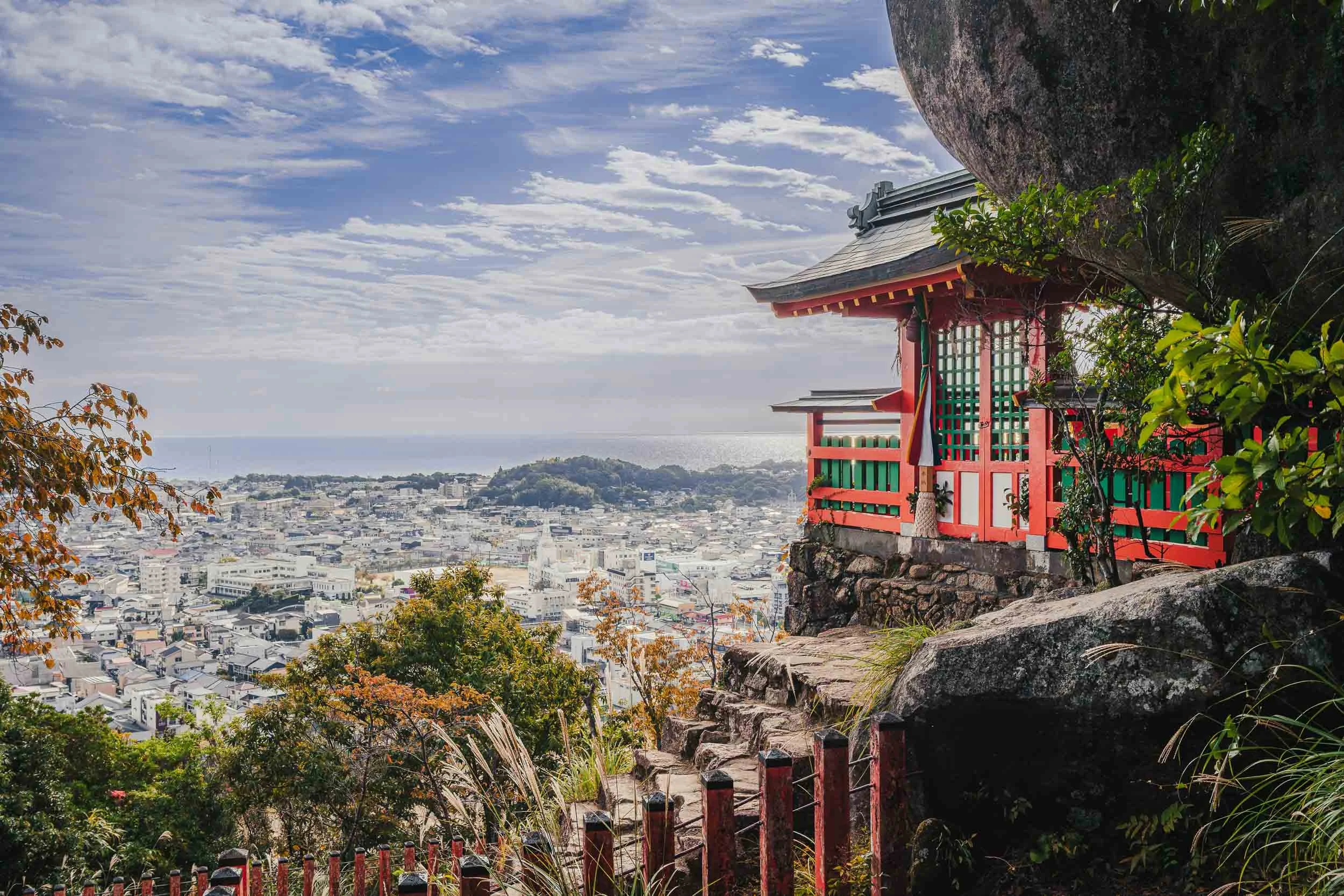
I left the Nakahechi for a while to climb to Kamikura Shrine in Shingu: 538 steep stone steps up the mountain, to a red shrine under a huge sacred rock called Gotobiki-iwa, where the gods are said to have first come down to earth. From up there you can see the town and the sea.
I have to say, after 4 days into the Kumano, climbing up 538 steps wasn’t the easiest thing. But the view at the top was the reward, and after a few days walking through a forest I just loved to stare at the sea for a while.
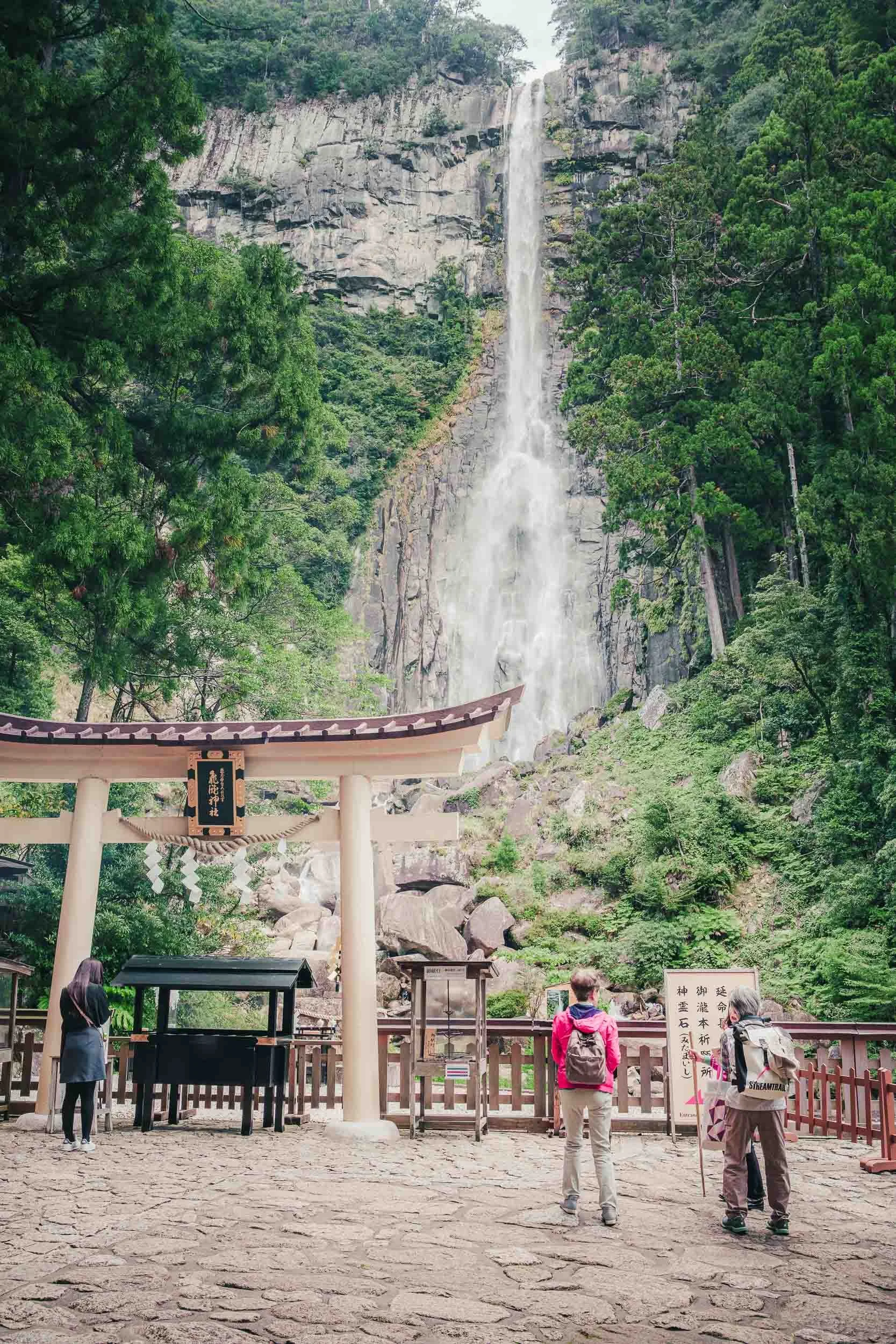
Later that day I went on to Nachi Falls. At 133 meters it’s the tallest single drop waterfall in Japan. The shrine in front of it, Hiro-jinja, has no worship hall: people pray facing the waterfall itself, because that’s where the deity resides.
Oyunohara
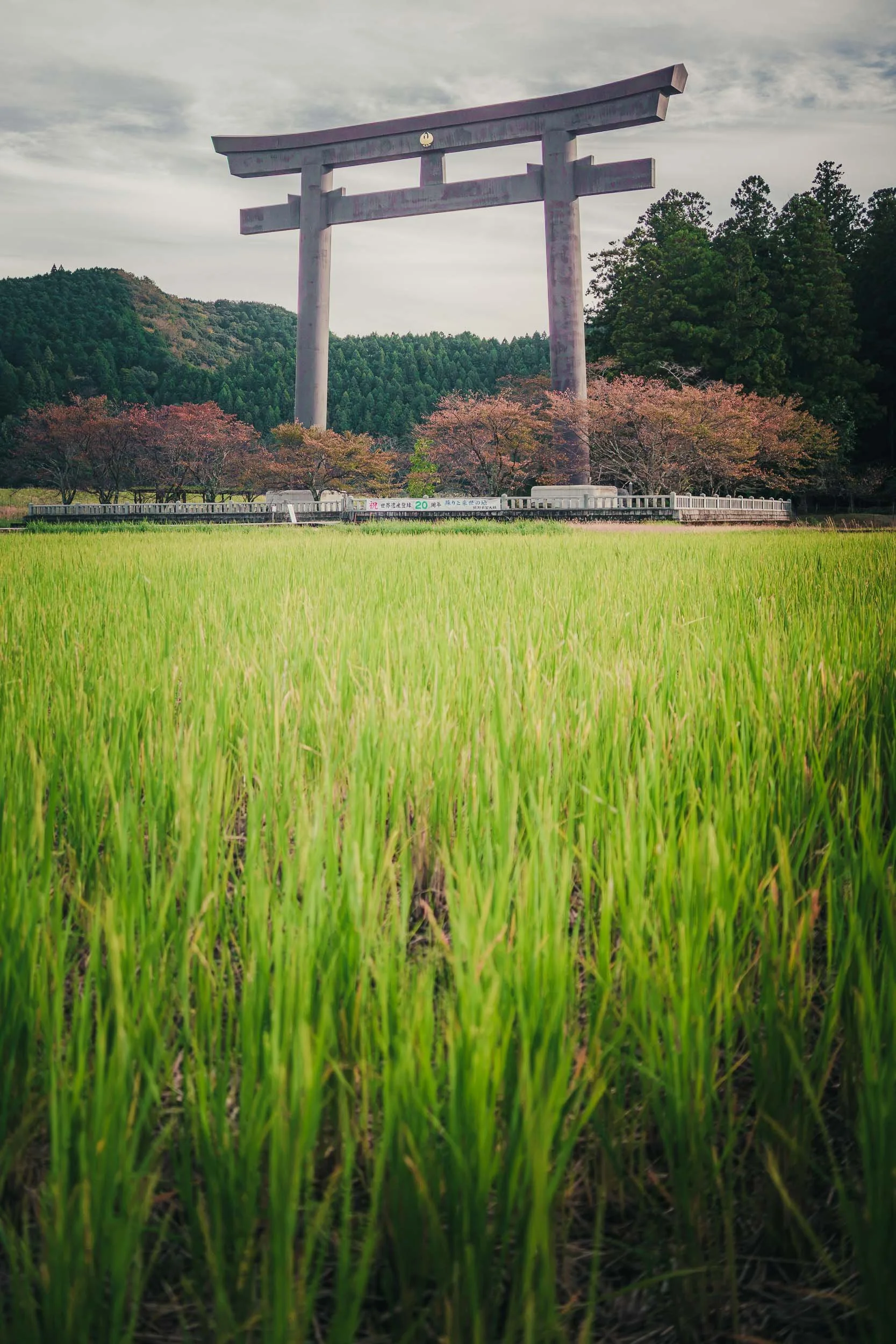
All the Kumano routes lead to Oyunohara, a sandbank where the Kumano and Otonashi rivers meet. Legend says the Kumano deities came down here as three moons and landed in a giant oak tree. Kumano Hongu Taisha stood on this spot for centuries, until a flood in 1889 destroyed many of its buildings. What survived was rebuilt about a kilometer away, where the shrine stands today.
The big torii at the entrance is steel, 33.9 meters tall, and was built in 2000. There are rice fields all around it. Past the gate you find the raised earth platform where the buildings stood, and two stone monuments for the eight deities that stayed behind when the other four were moved.
Pilgrims walked to this spot for centuries, on their way from or to Koyasan. The route from Hongu to Koyasan is called Kohechi, a very steep four day hike over passes above 1,000 meters. That’s for another day, hopefully soon.